Feature · 12 November 2026
AI's borrowers pay more as Taiwan's suppliers keep shipping
Lenders are charging the riskiest AI borrowers far more, while Taiwan's hardware makers are still growing and holding more stock.
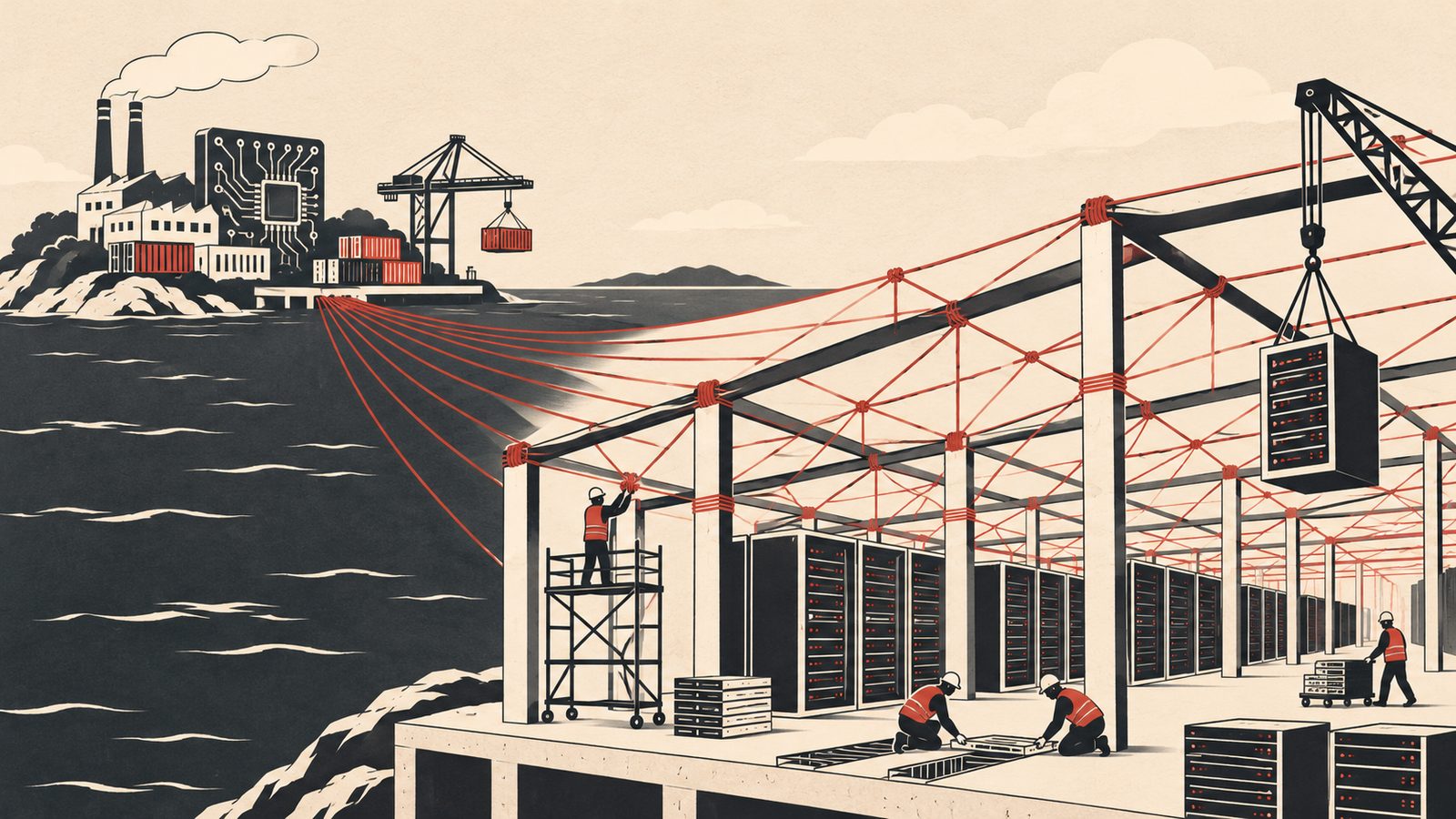
The data centres behind the AI boom are built largely with borrowed money, and in early November that money became dearer for the riskiest borrowers. CoreWeave, the best known of the neoclouds that rent out AI computing, saw the yield on its 2032 bond climb above 16%, while its five-year credit default swaps spiked above 1,289 basis points, according to Deutsche Bank data cited by CNBC. 1
The strain has reached larger names, though from a low base. The cost of insuring Nvidia's debt rose 76% in a month, CNBC reported, yet Nvidia's spread stood at roughly 139 basis points, against about 298 for Oracle. 1 Outside AI, credit is calmer. The broad US high-yield spread was 3.34 percentage points on 9 November 2026. The riskiest corporate borrowers are paying more: the spread on CCC-rated bonds was 13.11 percentage points, up from a low of 8.38 percentage points in the past year.
Lenders have not stopped funding the build-out; they are choosing how. CoreWeave is seeking at least $4 billion through an investment-grade loan tied to a customer contract and led by Morgan Stanley, at an expected rate of 7% to 7.5%, PANews reported, citing Bloomberg. Its chief executive had said the company would not raise money in the unsecured bond market at current rates. 2 Goldman Sachs counts $296 billion of hyperscaler debt issued this year and forecasts $440 billion next year. 1
Subscribers get each new feature by email on Friday, before it is on the site. Every listed Taiwan company reports its November sales by 10 Dec. The free Friday email on 11 Dec has the summary: which supply-chain groups grew and which shrank.
After subscribing, check your inbox (and spam folder) and confirm your subscription. We do this to protect you from spammers.
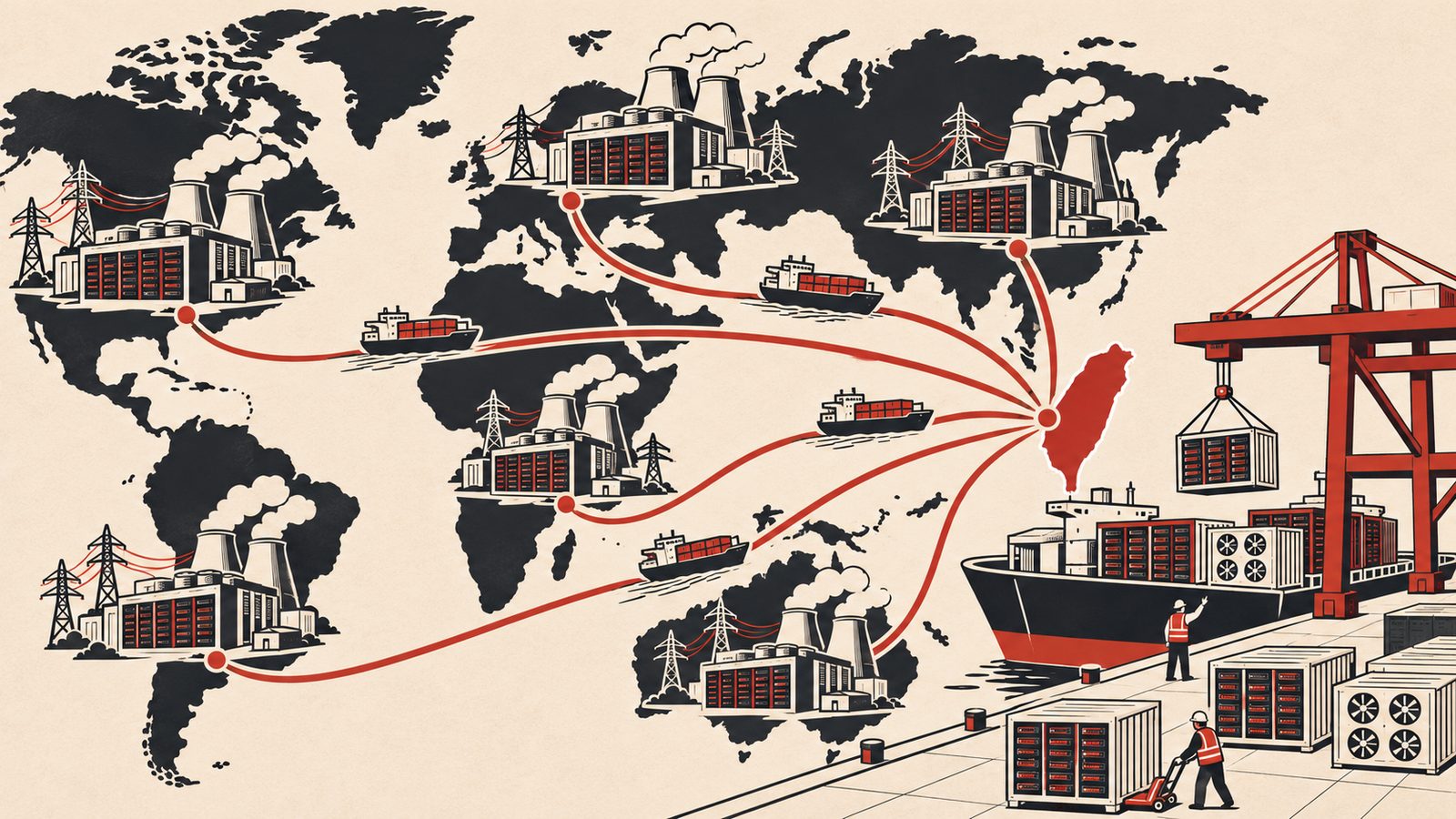
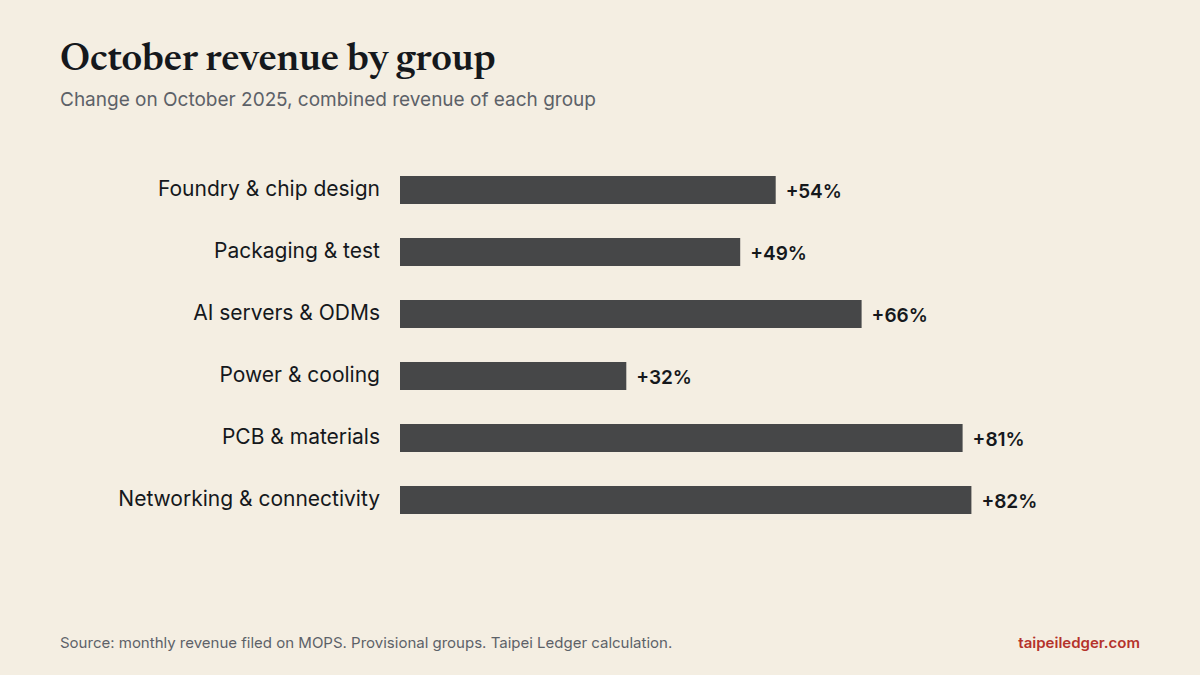
Those loans become orders in Taiwan, where the chips, servers, boards, power supplies and network gear are made, and so far the orders are still arriving. TSMC's revenue reached NT$586.9bn in October 2026, up 59.7% on a year earlier. Across 38 Taiwan-listed AI-hardware companies that Taipei Ledger tracks in provisional groups, combined revenue of the server makers rose 66.2%, that of the board and materials makers rose 80.7% and that of the networking and connector makers rose 82.0%. Power and cooling suppliers grew 32.5%, the least of the groups.
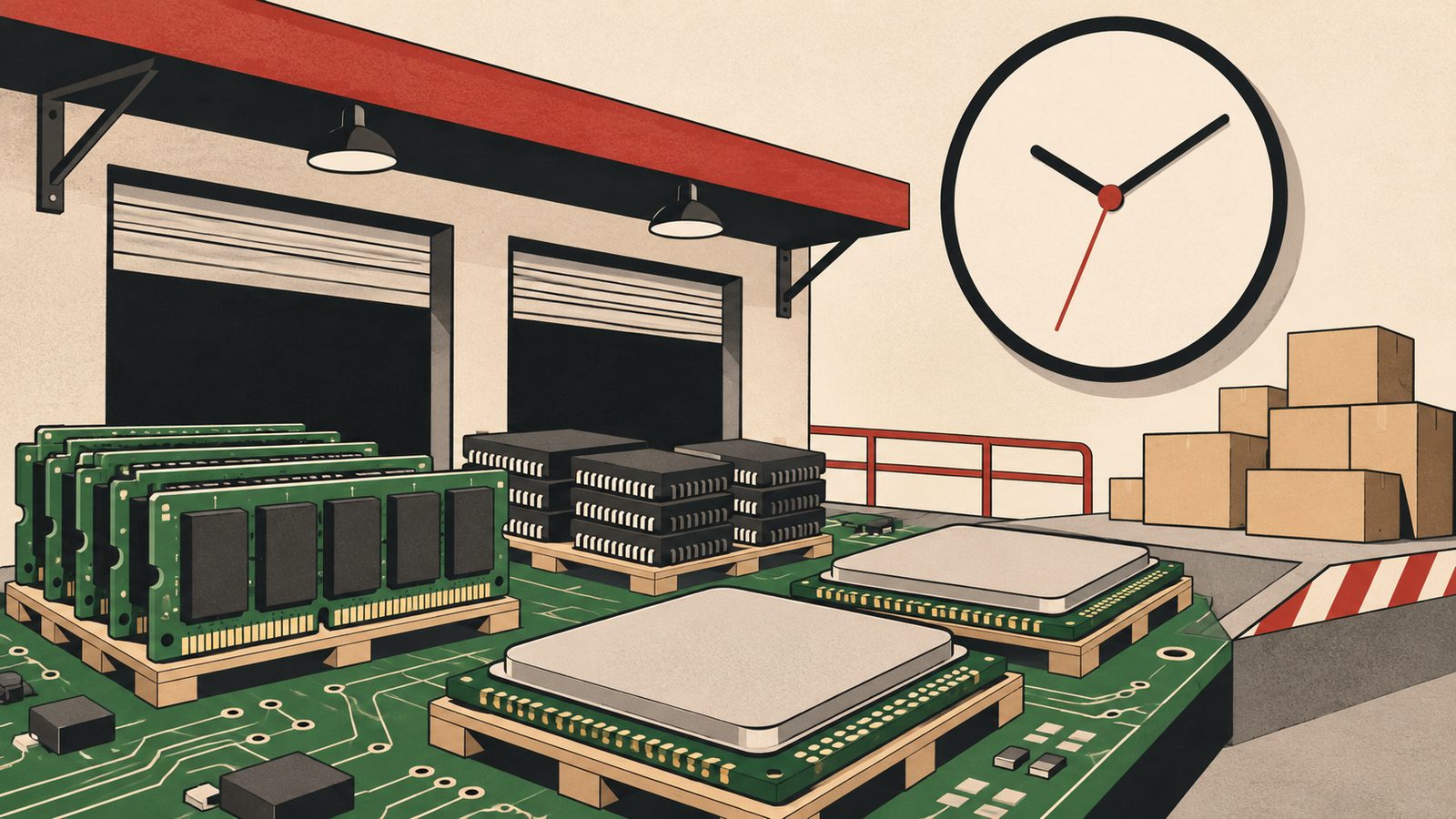
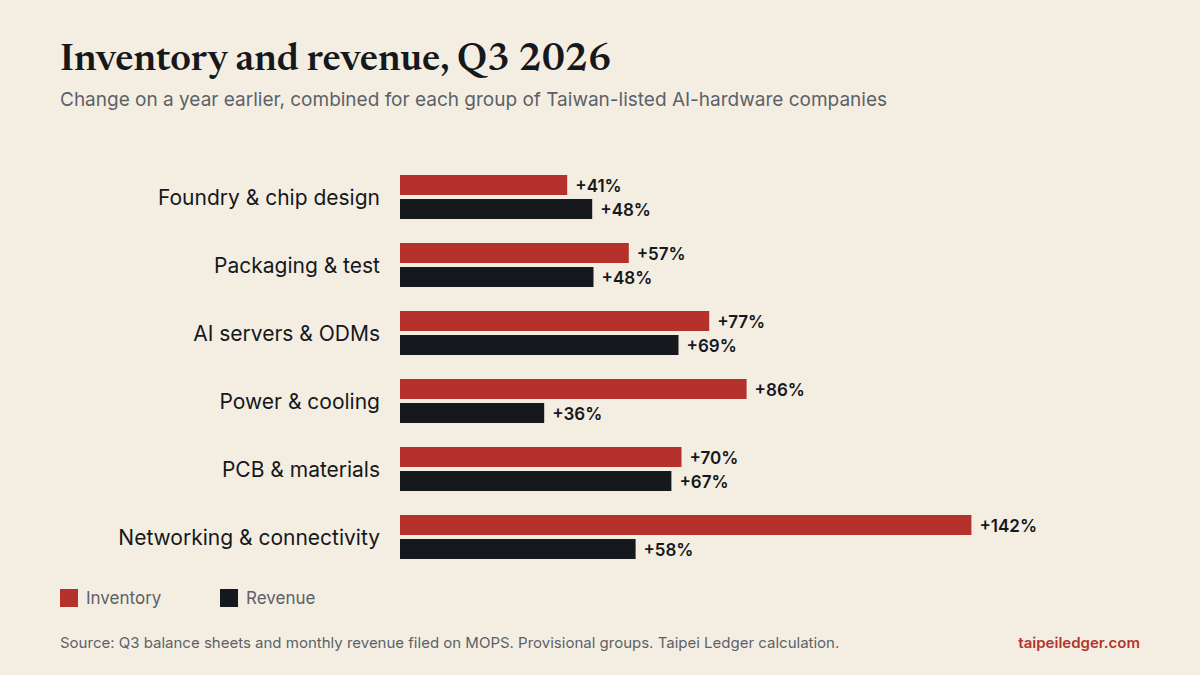
The balance sheets tell a less simple story. In 5 of the groups, inventory grew faster than revenue in the July to September quarter. At the networking and connector makers, inventory at the end of September rose 141.8% on a year earlier, while quarterly revenue rose 58.5%. Power and cooling inventory rose 86.0% while revenue rose 35.8%, taking stock from 65 to 89 days of sales. Rising inventory is not proof that orders are slipping, since suppliers build stock ahead of shipments already booked. It becomes a warning if it keeps climbing while sales growth slows.
The next readings are close. CoreWeave's loan, still being arranged, will show whether contract-backed lending stays open at that price. 2 Taiwan's November revenue figures follow in December, and a squeeze would appear first at the assemblers and component makers, not at the foundry.
Sources: 1. CoreWeave bond yield tops 16% as AI credit stress rises (CNBC, 6 Nov 2026) · 2. CoreWeave seeks at least $4B via investment-grade loan (PANews, citing Bloomberg, 11 Nov 2026)